Elevator Installation Tracker
Field digitalization for a Singapore elevator installer: the site progress that was scattered across WhatsApp groups, pulled into one dashboard the owner can read at a glance — crews report from site through a Telegram bot.
A company that ran on WhatsApp
A Singapore elevator-installation company: an owner (also head of sales), one chief engineer, one admin, one salesperson, and thirty-odd workers. No office systems at all — one admin holding it together in Office software, site progress living across a handful of WhatsApp groups. Between site visits and phone calls, the owner spent the rest of his day scrolling those groups trying to piece progress together — and when the chat got noisy, he couldn’t.
This wasn’t a template job. I walked the real install workflow with the owner and chief engineer, step by step, and modeled it the way they actually work.
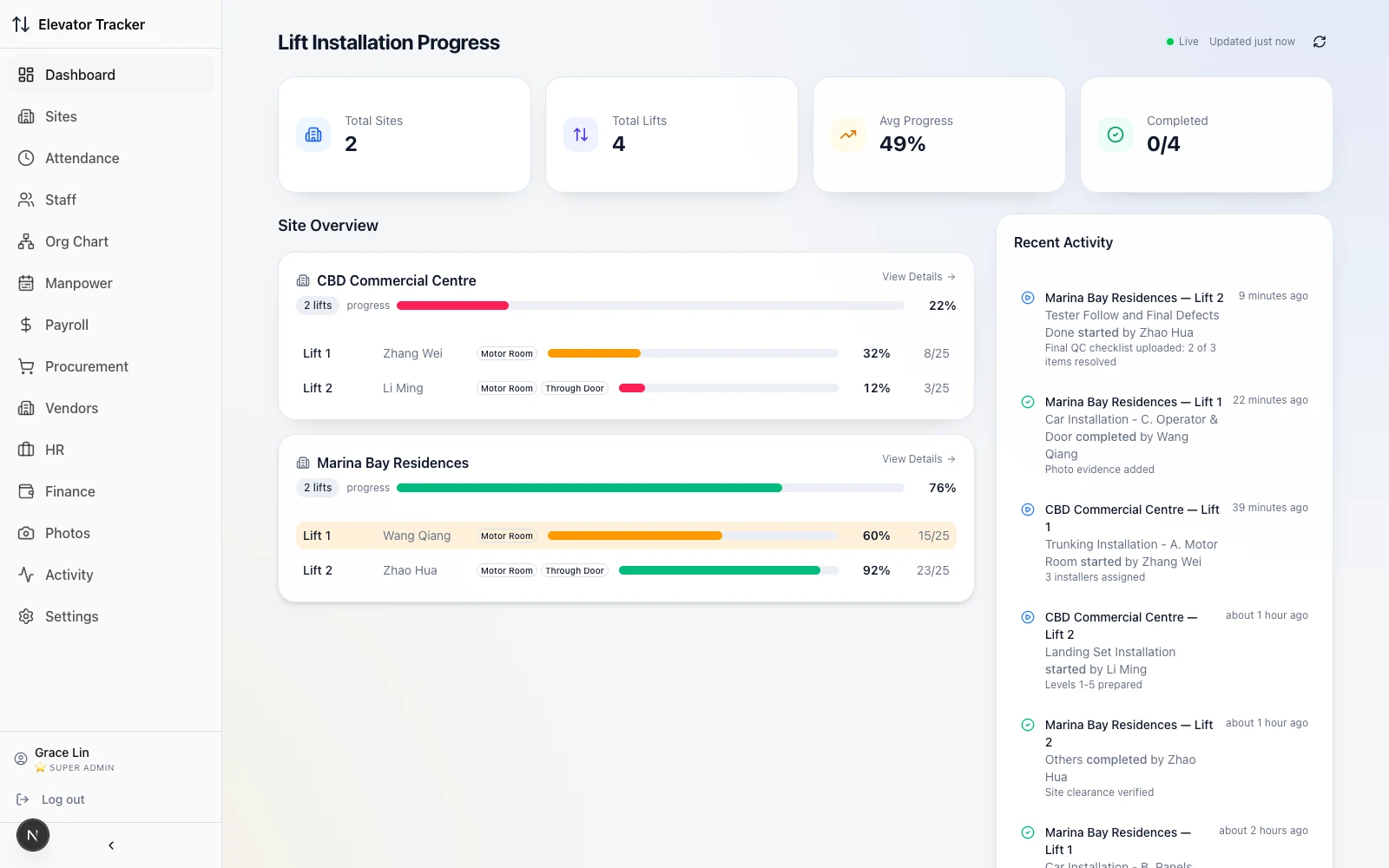
The owner can finally see progress
First job: get the owner out of the group chats. One dashboard — how many sites, how many lifts, overall percent complete, what just happened — read at a glance. Now he checks the board first.
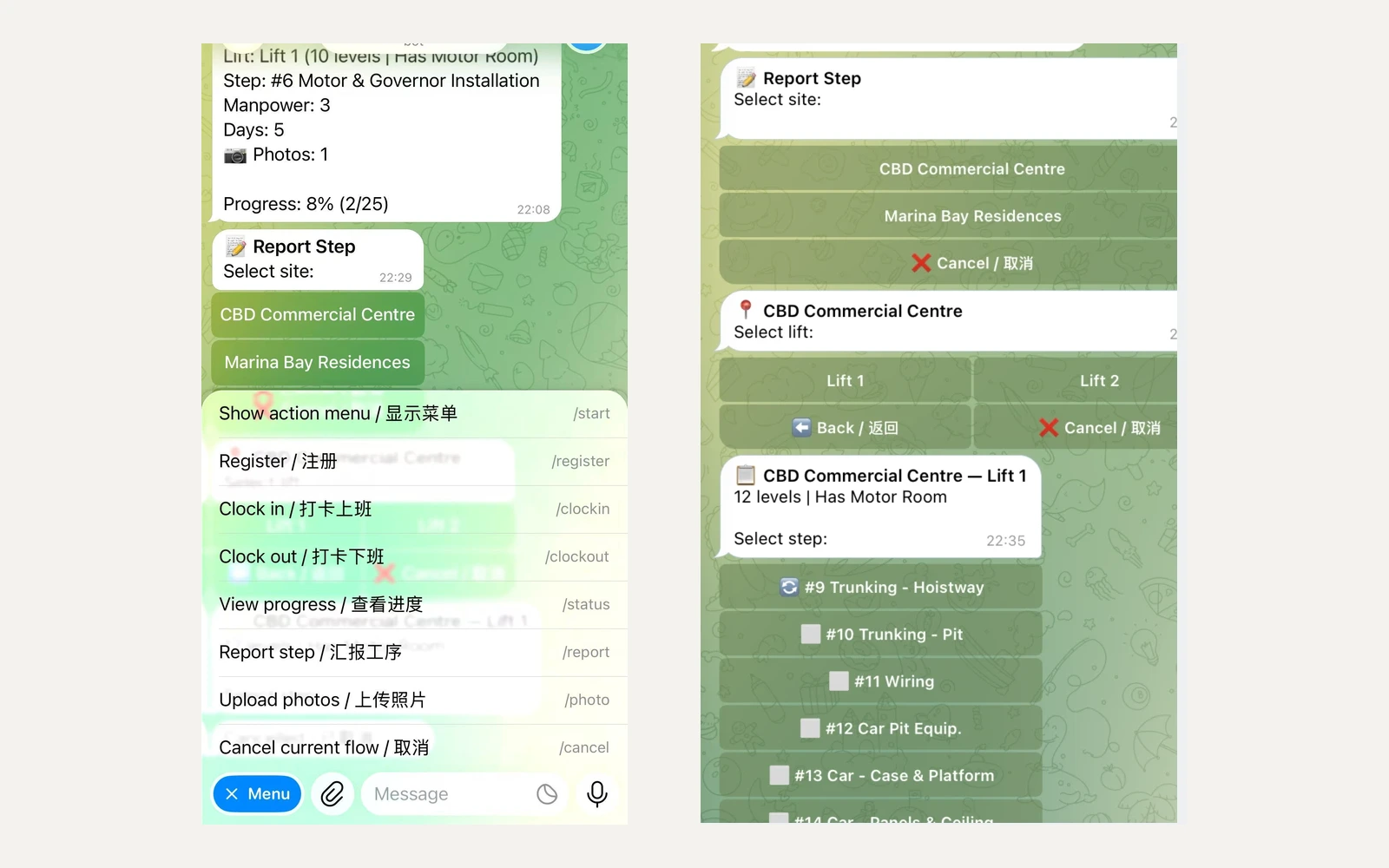
From group messages to records
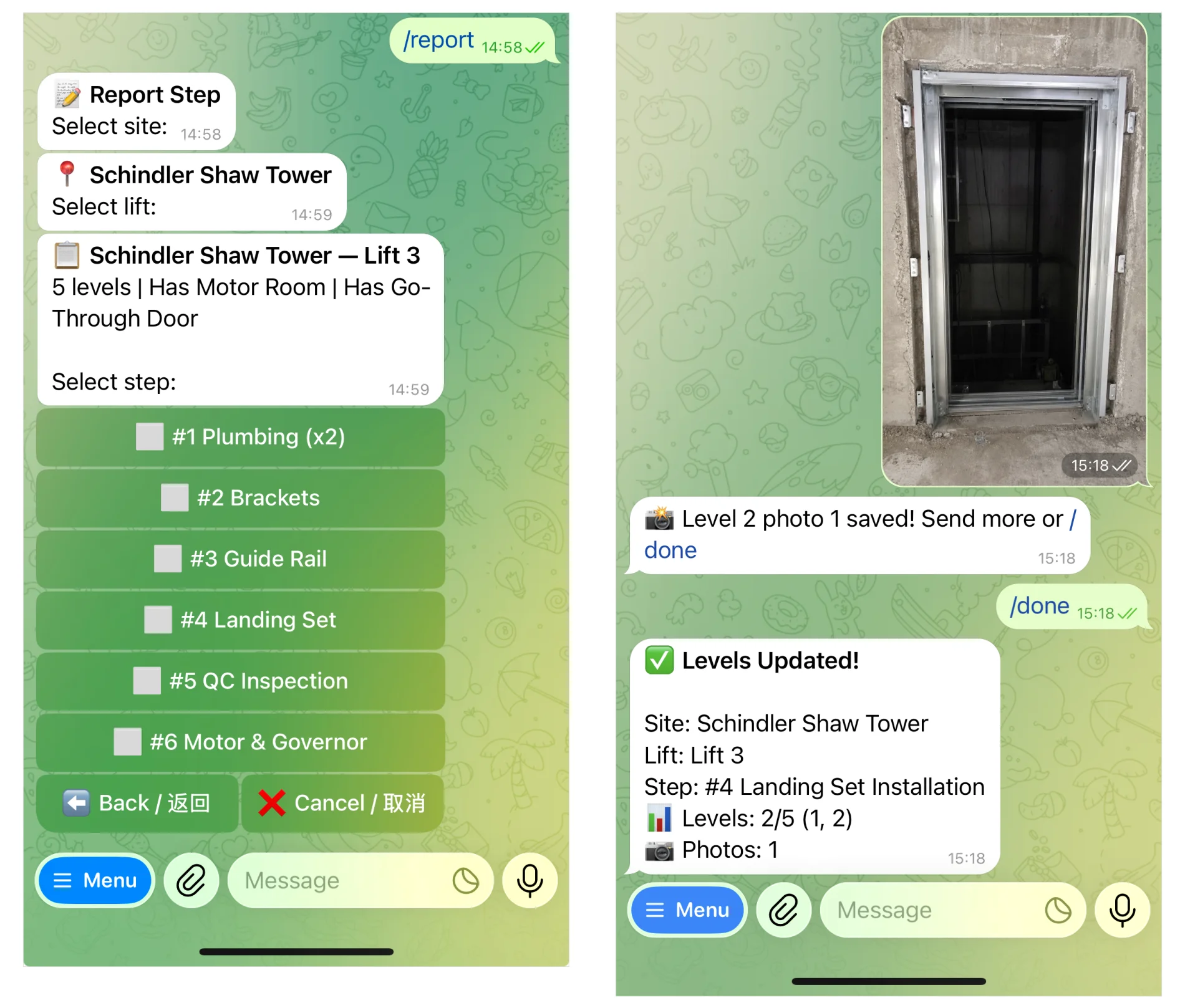
Workers install nothing new — they report from the chat tool they already use, through a Telegram bot: register, clock in and out, report a step, upload photos. Messages that used to dissolve into a group thread now land in the database one by one — with a timestamp, a name, and a photo.
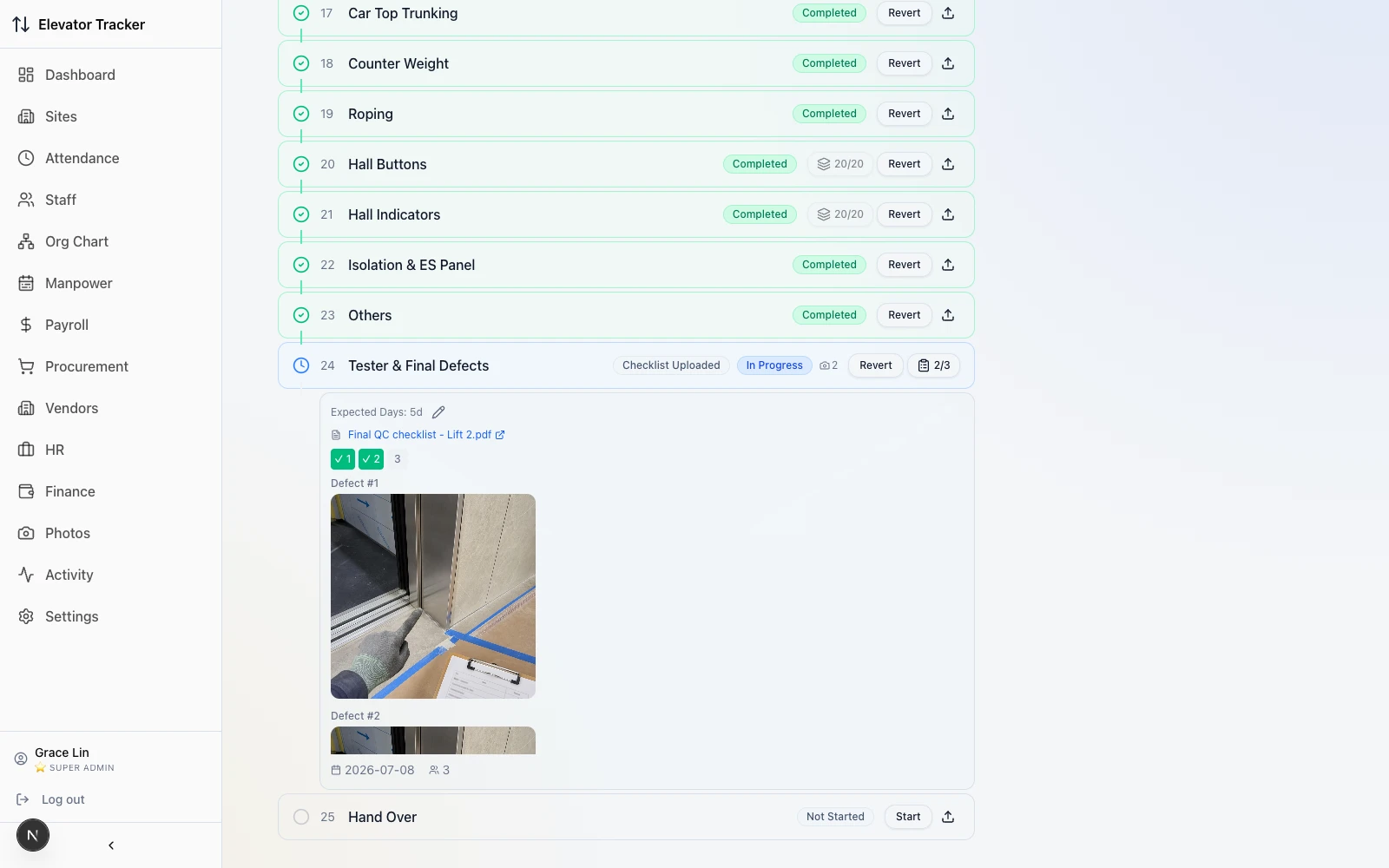
Every lift, every step, every photo
Each lift breaks into the real install steps — one record per step, photo evidence captured on site. The steps aren’t uniform: some need only a note and a photo, some are tracked floor by floor up a high-rise, and others can’t be marked done until a QC checklist is complete. That variation isn’t invented — it’s built from how they actually work.
Clock in on site, or not at all
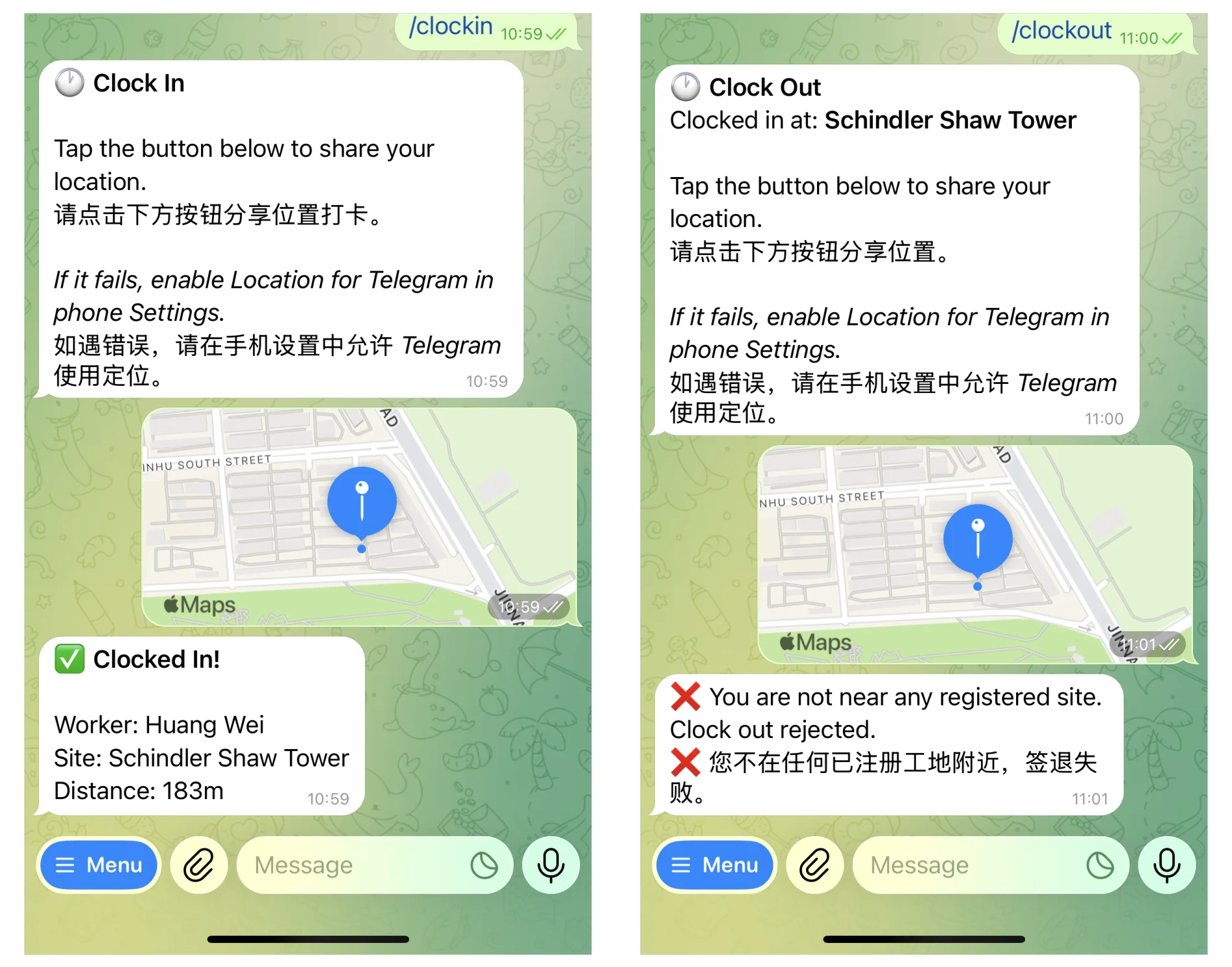
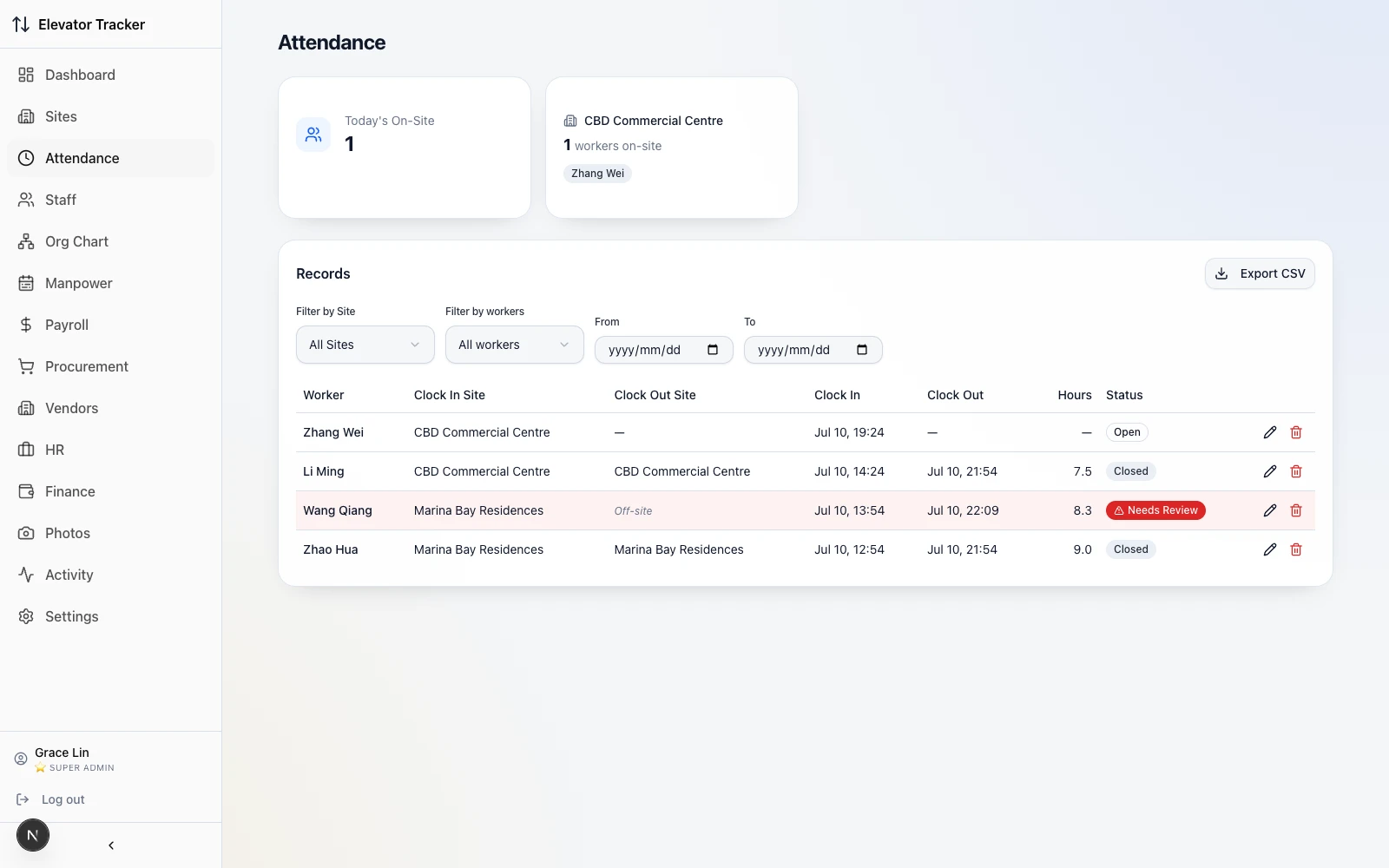
Clock-in runs through the same bot — but it has to happen on site. The worker shares location, the bot measures the distance to the nearest registered site, and anything off-site is refused outright. On the office side every shift lands in one ledger, and an odd one — an off-site clock-out, an over-long shift — is flagged for review instead of quietly booked. Edits leave the before/after, who changed it, and why.
A serious business system
Progress, attendance, photos — it all has to reconcile and hold up to scrutiny. Happy to walk through more in person.